


Kitchen King
❄️ CRYOGENIC TECHNOLOGY • ✨ 3x MORE FLAVOUR
Price-to-weight: ₹2/gram
- ₹9 PER DISH
- 40g ≈ 10 uses
- Lasts ~1 month
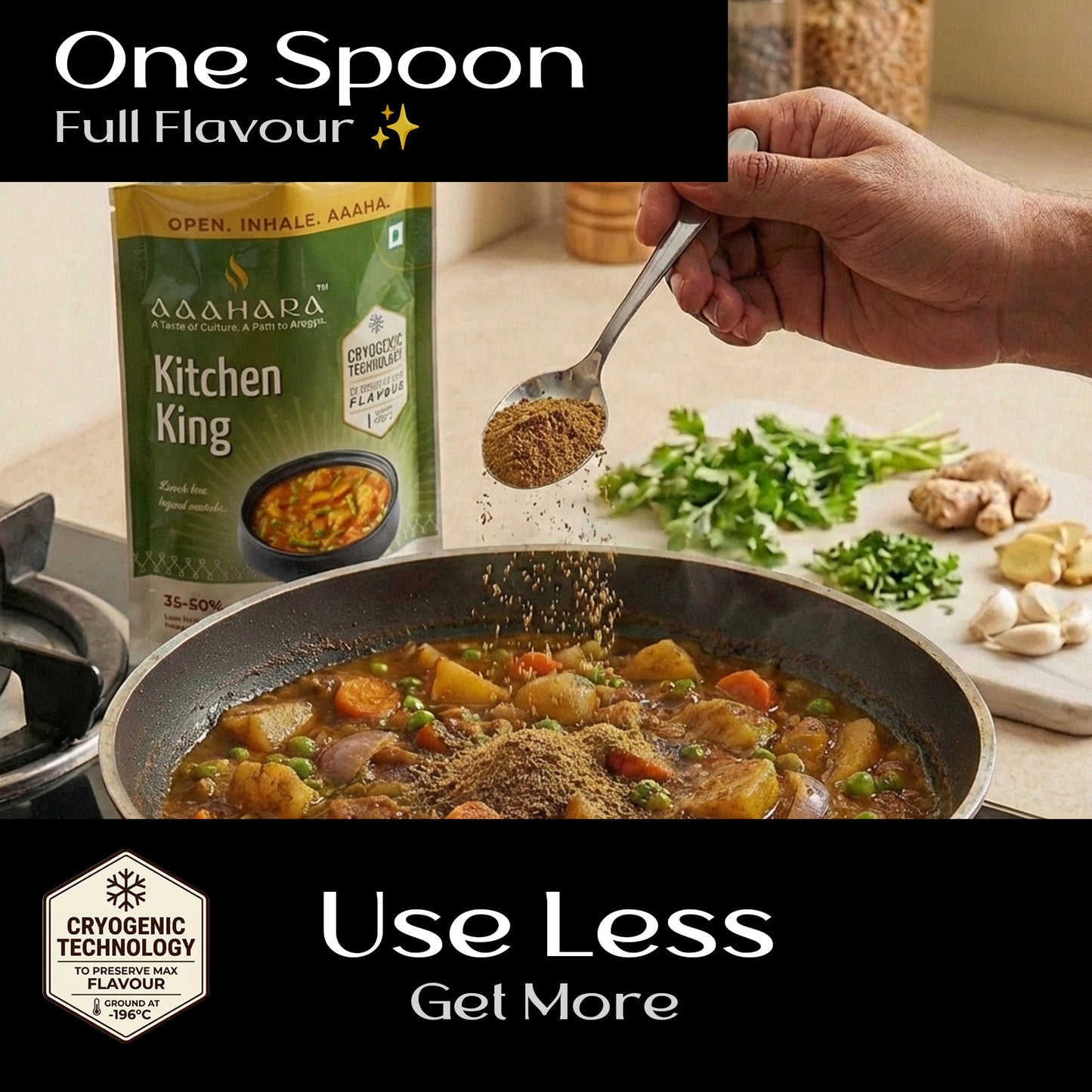
All-purpose spice blend suitable for vegetable and curry dishes - enhancing flavour, colour and aroma in everyday cooking. Cryogenically ground to preserve 3× more volatile oils - use half the quantity for the same bold flavour.
~25 Uses at 1.5 tbsp per dish
24 Months from manufacture date

Plant-Based. No Additives. Eco-Friendly.
Organic. All-Natural. Preservative-Free.
Soy Free. Low Sugar. High Protein.
-

Cryogenic Grinding
Ground at −196°C in liquid nitrogen
-

Zero Additives
No preservatives, colours or fillers
-

FSSAI Verified
Lic. 11225333001354
-

Lab Tested
Third-party · Every batch
-

Naturally Sourced
Pure ingredients only


See Why People Love Us
Testimonials
-
I didn't expect this much difference, but the aroma itself took me back to how food used to smell at home. The sambar felt fuller and more balanced without needing too much masala.
Lakshmi Venkataraman

-
What stood out to me is how clean the flavour feels. It's not overpowering or artificial just consistent and well-rounded every time I cook. You can tell the processing is different.
Arjun Menon

-
I was curious about the cryogenic grinding, and you can actually notice it while cooking. The aroma builds slowly instead of hitting all at once, and the flavour feels much more natural compared to regular masalas.
Sanjay Iyer


The Ingredients Behind the Flavour
Most blends use the same spices. The difference is in which ones are chosen, and how much of their flavour actually survives the grinding process.

Fennel Seeds

Dry Ginger

Coriander

Green Cardamom
Cryogenic Technology
Ground at −196°C
Ground at −196°C in liquid nitrogen. Cryogenic grinding preserves volatile oils and flavour that conventional grinding destroys.
Your food tastes noticeably more intense
Cryogenic grinding preserves 3x more volatile oils - the compounds that carry taste and aroma - compared to conventional heat grinding.
Your pack lasts twice as long
Because flavour concentration is so high, you use half the amount per dish - so 400g lasts as long as 800g of a conventional brand.
Zero flavour lost in the grinding process
At liquid nitrogen temperatures there is no heat, no oxidation, no evaporation. Every volatile oil is locked in at its most potent moment.
Pure spice - nothing diluting it
No anti-caking agents, artificial colours or preservatives. Every ingredient in the pack is a spice. FSSAI verified and lab tested every batch.
Every Doubt Answered
FAQs
What is kitchen king masala used for?
Kitchen king masala is a blend of all major spices used in cooking dishes like subzis. It has a strong, spicy flavour and should be used sparingly. It can be used for almost any dry sabji, gravy curry, fried rice, and even chaat recipes.
What is the difference between kitchen king masala and garam masala?
Garam masala is a traditional aromatic finishing spice used in the last 5–10 minutes of cooking, while kitchen king masala is a modern all-purpose blend designed to be used throughout cooking for complete seasoning.Kitchen king masala also contains chilies, black salt, and mango powder that garam masala doesn't, making it spicier and more layered in flavour.
When should kitchen king masala be added while cooking?
Add it toward the end of the cooking process to preserve its aroma and balance of flavours specifically after the onion-tomato base has been sautéed and the dish is simmering. A teaspoon or two is usually plenty for a family-sized curry.
Is kitchen king masala good for health?
Cumin in the blend helps cope with flatulence, indigestion, and nausea, while turmeric contains curcumin which has antioxidant, anti-inflammatory, and antibacterial properties. Since it is used in small quantities, the benefits are moderate but reflect the natural properties of the 20+ spices in the blend.
How should kitchen king masala be stored?
Once the pack is opened, transfer the contents to an airtight container and store in a cool, dry place. Always use a dry spoon to take out the masala and ensure the container is tightly lidded after every use.


